Health and Safety Policy — Commercial Waste Enfield
This Health and Safety policy sets out the commitments of our commercial waste operation to protect the health, safety and welfare of employees, contractors and the public across our rubbish company service area. Our priority is safe, compliant waste collection and disposal, reducing risk while maintaining efficient commercial refuse services. This statement applies to all activities linked to waste collection, transfer, storage and disposal performed by the commercial waste removal teams and associated personnel.Scope and Responsibilities
The policy covers operational sites, collection routes, customer premises and transfer facilities. Managers are responsible for implementing this policy, ensuring legal duties are met and resources are available. Employees and subcontractors must follow safe systems of work, report hazards and participate in training. Contract supervisors will regularly review performance and coordinate with environmental health and safety officers where required. All staff must be familiar with this policy and the procedures relevant to their role.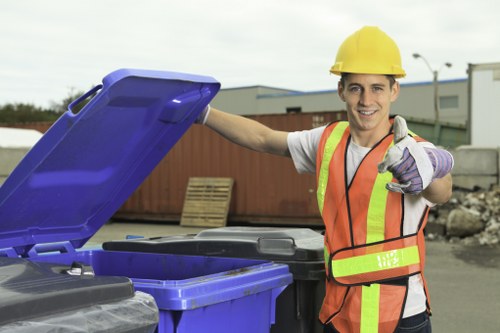
Risk Assessment and Control Measures
Systematic risk assessments are mandatory across our waste collection routes and depot activities. Key controls include engineering measures, administrative controls and appropriate personal protective equipment (PPE). The following list summarises principal responsibilities and controls:- Identify and evaluate hazards: manual handling, sharps, chemical contamination, vehicle movement and confined spaces.
- Implement controls: segregation of waste streams, secure containers, safe lifting aids and mechanical handling where possible.
- Enforce safe vehicle operations: pre-use checks, load security and route risk assessments for each commercial refuse service.
Operational Controls and Safe Working Procedures
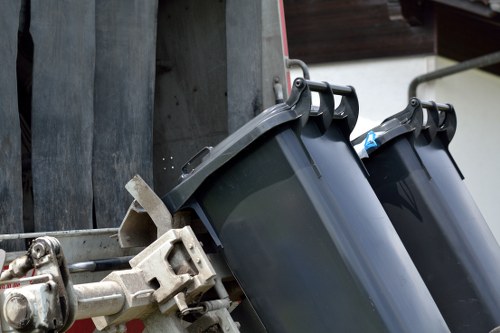
Operational procedures are designed to reduce incidents and exposures during day-to-day rubbish collection and commercial waste removal tasks. Standard operating procedures (SOPs) address loading and unloading, bin handling, hazardous waste recognition and communications during collections. Supervisors will ensure SOPs are accessible and consistently followed. Vehicle-mounted equipment is inspected daily and maintained to a high standard, and any defects are recorded and repaired before use.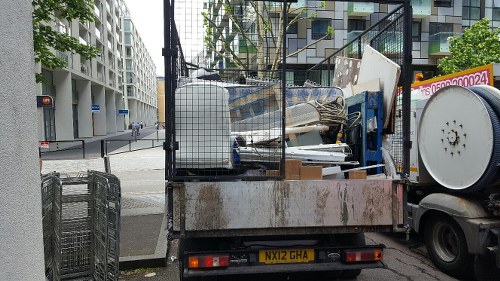 Personal protective equipment is provided based on risk assessments and must be used where required. High-visibility clothing, gloves, safety boots, eye protection and respiratory protection (where dust or aerosols are a concern) form the minimum PPE for many tasks. Staff are trained in correct use, maintenance and storage of PPE. Environmental controls, such as spill kits and containment measures, are in place to deal with accidental releases during transfer or storage of commercial waste.
Incident Reporting and Emergency Response
All accidents, near-misses and environmental incidents must be reported promptly. Investigations identify root causes and corrective actions to prevent recurrence. Emergency procedures include immediate first aid, containment of hazardous materials, and evacuation protocols where necessary. The rubbish company service area maintains a clear escalation process so that serious incidents trigger senior management and regulatory notifications as required by law.
Training, Competence and Contractor Management
Training programs ensure staff and contractors are competent to perform their duties safely. Induction training covers core health and safety principles, manual handling, safe vehicle operations and waste segregation relevant to commercial waste Enfield operations. Ongoing refresher training, toolbox talks and competency assessments maintain awareness and skills. Contractors are selected based on safety performance and must comply with our standards for collection, transfer and disposal within the wider rubbish collection service area.Monitoring, audit and inspection regimes measure compliance with this policy. Regular site audits, vehicle checks and route observations help identify emerging risks. Performance indicators — such as incident rates, audit findings and corrective action closure times — are used to drive continuous improvement. Senior management review these metrics periodically and allocate resources to address identified weaknesses in the commercial refuse service.
 Review and Continuous Improvement
The policy will be reviewed at least annually or following significant change, incident or regulatory update to ensure it remains effective and appropriate for our rubbish company operations. Continuous improvement is achieved through:
- Learning from incidents and near-misses to update safe systems of work.
- Integrating feedback from operational staff into procedure modifications.
- Investing in safer equipment and technologies for waste handling and vehicle operations.
Commitment: senior management is committed to providing the leadership, resources and oversight necessary to achieve the objectives of this Health and Safety policy across the commercial waste and refuse services. By working together, we will maintain a safe workplace and deliver reliable, compliant waste collection services for our customers across the service area.
